Sun Joe Pressure Washer Soap Instructions: A Comprehensive Guide
Navigating the world of Sun Joe pressure washers and detergents can be tricky! This guide offers detailed instructions, covering everything from compatible soaps to troubleshooting, ensuring optimal cleaning performance.
Understanding Sun Joe Pressure Washers & Soap
Sun Joe pressure washers are renowned for their affordability and effectiveness, offering a powerful cleaning solution for various outdoor tasks. However, maximizing their potential hinges on understanding how they interact with cleaning soaps. Unlike some systems, Sun Joe washers aren’t universally compatible with all detergents; using the wrong soap can lead to reduced performance, damage to the pump, or even void the warranty.
These washers utilize a siphon system to draw soap from a dedicated tank, mixing it with pressurized water. The key is selecting soaps specifically formulated for pressure washers, as these are designed to be low-sudsing and won’t harm the internal components. Regular dish soap or household cleaners create excessive foam, potentially damaging the motor and pump.
Furthermore, understanding the different types of Sun Joe models – electric versus gas – is crucial, as soap application methods can vary slightly. Always consult your washer’s manual for specific recommendations and guidelines regarding soap usage. Proper understanding ensures a safe and efficient cleaning experience.
Types of Soap Compatible with Sun Joe Washers
Sun Joe pressure washers thrive on specialized detergents, categorized by their cleaning purpose. All-purpose soaps tackle general grime on surfaces like siding, decks, and patios. These are a versatile starting point for many cleaning projects. Car wash soaps are formulated to be gentle on automotive paint, preventing streaks and damage – crucial for vehicle maintenance.
Deck and patio cleaners specifically address mildew, algae, and stubborn stains common on outdoor wood and concrete. These often contain brightening agents for enhanced results. Concrete and driveway cleaners are heavy-duty, designed to lift oil, grease, and dirt from tougher surfaces. Biodegradable options are available for environmentally conscious users.
Crucially, avoid soaps containing chlorine bleach or abrasive chemicals, as these can corrode the washer’s components. Always opt for detergents explicitly labeled as “pressure washer safe” and low-sudsing. Sun Joe also offers its own branded soaps, ensuring compatibility and optimal performance with their machines.
Recommended Sun Joe Soaps
Sun Joe offers a diverse range of soaps tailored to specific cleaning needs, ensuring optimal performance with their pressure washers. For general outdoor cleaning, the Sun Joe House & Siding Wash is a popular choice, effectively removing dirt and grime from various surfaces. Car enthusiasts will appreciate the Sun Joe Car Wash Soap, formulated to deliver a streak-free shine without damaging paint.
To tackle stubborn deck stains, the Sun Joe Deck & Patio Cleaner is highly recommended, containing brightening agents to restore wood’s natural beauty. For heavy-duty concrete cleaning, the Sun Joe Concrete & Driveway Cleaner cuts through grease and oil with ease. Sun Joe Snow Foam Soap creates a thick, clinging foam for enhanced cleaning and a professional finish.
Consider the Sun Joe Ultimate Wash, a concentrated all-purpose cleaner offering exceptional value. Always check the product label for specific surface compatibility and dilution ratios to maximize cleaning power and protect your equipment.
Dilution Ratios for Sun Joe Soaps
Achieving the optimal cleaning power with Sun Joe soaps relies heavily on correct dilution. Incorrect ratios can lead to residue buildup, reduced effectiveness, or even damage to your pressure washer. Generally, Sun Joe recommends a dilution ratio of 1:3 or 1:4 for most soaps – one part soap to three or four parts water.
However, this can vary! The House & Siding Wash typically requires a 1:3 ratio for moderate soiling, increasing to 1:2 for heavier grime. The Car Wash Soap often benefits from a more diluted 1:5 ratio to prevent streaking. For the Deck & Patio Cleaner, a 1:4 ratio is usually sufficient, while the Concrete & Driveway Cleaner may require a stronger 1:2 mix for deeply embedded stains.
Always consult the specific soap’s label for precise instructions. Using the soap tank’s measurement markings aids accurate mixing. Experimenting slightly within the recommended range can fine-tune performance based on your cleaning task.
Using the Soap Nozzle
The soap nozzle is crucial for effectively applying detergent with your Sun Joe pressure washer. It’s typically a wider-angle nozzle, often white or black in color, designed to draw soap from the detergent tank and mix it with the water stream. Before applying soap, ensure the nozzle is correctly attached – a click usually confirms secure placement.
Switching to the soap nozzle is usually done via a dial or selector on the pressure washer lance. Rotate this dial to the “soap” or “low-pressure” setting. Avoid using the soap nozzle with high-pressure settings, as this can damage the washer or create excessive foam. The soap nozzle delivers a lower-pressure, higher-volume spray, ideal for coating surfaces evenly.
Test the spray pattern on an inconspicuous area to confirm proper soap distribution. If the pattern is uneven, check for clogs in the nozzle or soap tank filter. Regularly cleaning the soap nozzle ensures consistent performance and prevents streaking during cleaning.
Filling the Soap Tank
Locating the soap tank on your Sun Joe pressure washer is the first step. It’s usually a translucent container, often screw-on, positioned near the pump. Before filling, ensure the pressure washer is turned OFF and disconnected from the power source for safety.
Carefully unscrew the soap tank cap and fill it with the appropriate Sun Joe detergent or a compatible soap. Avoid overfilling; leave some space to allow for proper mixing. Do not use flammable liquids or harsh chemicals in the soap tank, as this can damage the washer and void the warranty.
Securely tighten the soap tank cap after filling to prevent leaks during operation. Some models have a filter built into the tank opening; ensure this filter is clean and unobstructed. Regularly inspect the tank for cracks or damage and replace it if necessary. Proper filling ensures consistent soap delivery and optimal cleaning results.
Adjusting Soap Flow
Controlling the amount of soap dispensed is crucial for effective cleaning. Sun Joe pressure washers typically feature a variable soap flow control knob or dial, usually located near the soap tank connection or on the trigger handle. This allows you to adjust the soap-to-water ratio.
Start with the lowest soap flow setting and gradually increase it until you achieve a consistent, foamy lather. Avoid excessive soap usage, as it can leave a residue and require more rinsing. The ideal setting depends on the type of soap, the surface being cleaned, and the level of dirt or grime.
Experiment with different settings to find the optimal balance for your specific cleaning task. Some models also have a dedicated “soap” setting on the pressure dial, which automatically adjusts the water pressure for soap application. Regularly check the soap flow to ensure it remains consistent throughout the cleaning process.
Pre-Wash Considerations
Before applying any soap, proper preparation is key for optimal results. Begin by removing loose debris like leaves, dirt clumps, and large particles from the surface using a broom or brush. This prevents clogging the nozzle and ensures the soap can effectively penetrate the remaining grime.
Consider the surface material. Different surfaces require different approaches. Delicate surfaces may benefit from a pre-rinse with low pressure to loosen dirt before soap application. For heavily soiled areas, a pre-soak with a dedicated degreaser can significantly improve cleaning performance.
Protect surrounding areas. Cover plants, electrical outlets, and sensitive items to prevent accidental soap exposure. Always test the soap in an inconspicuous area to ensure it doesn’t cause discoloration or damage. A little preparation saves time and prevents potential issues later!
Applying Soap: Step-by-Step Instructions
Now for the cleaning action! First, ensure the soap tank is filled with the appropriate Sun Joe detergent and the correct dilution ratio (refer to the ‘Dilution Ratios’ section). Attach the black soap nozzle to your Sun Joe pressure washer wand.
Begin by holding the nozzle approximately 6-12 inches from the surface. Apply the soap using a sweeping motion, overlapping each pass slightly to ensure complete coverage. Work from the bottom up to prevent streaking, especially on vertical surfaces.
Allow the soap to dwell for a few minutes – typically 2-5 minutes – but avoid letting it dry completely. This dwell time allows the soap to break down dirt and grime. Monitor the surface; if the soap starts to dry, lightly mist with water. Remember to maintain a consistent distance and motion for even application.

Rinsing After Soap Application
Thorough rinsing is crucial for a spotless finish and to prevent residue buildup. Switch back to the high-pressure nozzle (typically the 0° or 25° nozzle, depending on the surface). Maintain a consistent distance of 8-12 inches from the surface, similar to soap application.
Rinse using a sweeping motion, working from top to bottom to effectively remove all traces of soap and loosened dirt. Overlap each pass to ensure complete coverage. Pay close attention to crevices and corners where soap may accumulate.
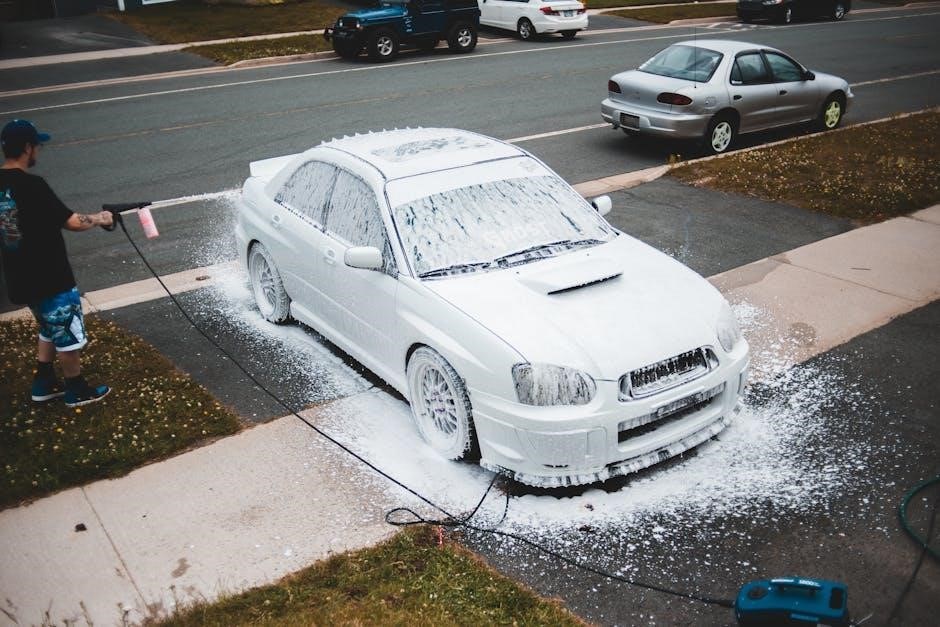
Continue rinsing until the surface is completely free of suds and residue. Inspect the area carefully; any remaining soap can attract dirt and leave streaks. A final, broad rinse will help ensure a clean, professional result. Proper rinsing protects both your surfaces and your Sun Joe pressure washer.
Troubleshooting Soap-Related Issues

Encountering problems with soap delivery? Here’s how to address common issues. Low soap output often stems from a clogged soap filter within the tank. Disconnect the power, remove the tank, and thoroughly clean the filter with warm water. Ensure the soap intake tube isn’t kinked or blocked.
If soap isn’t mixing properly, verify the correct dilution ratio is being used (refer to the ‘Dilution Ratios’ section). Check the soap tank’s vent hole; it must be clear for proper suction. Also, confirm the soap selector dial is fully engaged to the ‘soap’ setting.
Persistent issues may indicate a faulty soap injector. Contact Sun Joe customer support for assistance. Regular maintenance, including filter cleaning, prevents most soap-related problems, ensuring consistent cleaning performance.
Low Soap Output
Experiencing weak soap flow during operation? Several factors can contribute to this issue. First, inspect the soap filter located inside the detergent tank. A clogged filter restricts soap intake, significantly reducing output. Remove the tank and rinse the filter thoroughly under warm water to eliminate any debris.
Next, check the soap suction tube connecting the tank to the pressure washer. Ensure it isn’t kinked, bent, or blocked. A clear pathway is crucial for effective soap draw. Also, verify the soap selector dial is correctly positioned on the ‘soap’ setting; an incorrect setting bypasses the soap injection system.
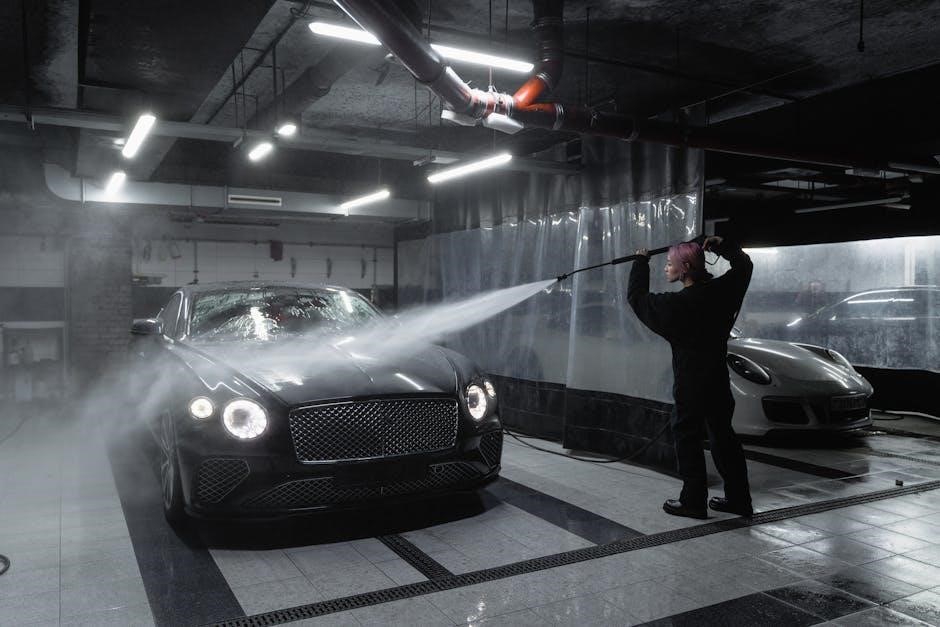
Finally, confirm the detergent itself isn’t overly thick or concentrated. Dilute the soap according to the recommended ratio (see ‘Dilution Ratios’) to optimize flow. If problems persist, a faulty soap injector might be the cause – contact Sun Joe support.
Soap Not Mixing Properly
Is your soap failing to blend adequately with the water stream, resulting in streaky or ineffective cleaning? This often stems from improper dilution or issues within the pressure washer’s mixing chamber. Double-check the dilution ratio specified for your chosen Sun Joe soap (refer to ‘Dilution Ratios’). Using too much soap overwhelms the system, preventing proper mixing.
Inspect the soap injector for any blockages. Mineral deposits or dried soap residue can obstruct the flow and hinder mixing. Disconnect the injector (consult your owner’s manual) and flush it with warm water. Ensure the water supply to the pressure washer is strong and consistent; low water pressure impacts mixing efficiency.
Try a different soap formulation. Some soaps are inherently more prone to mixing issues than others. If the problem persists, a malfunctioning soap injector may require replacement. Contact Sun Joe customer support for assistance and potential repair options.
Maintaining Your Sun Joe Soap System
Regular maintenance is crucial for a consistently performing soap system. After each use, thoroughly flush the soap tank with clean water to prevent residue buildup and potential clogs. Pay close attention to the soap injector; periodically remove and inspect it for mineral deposits or dried soap, cleaning with warm water and a soft brush.
Avoid using harsh chemicals or abrasive cleaners on any part of the soap system, as these can damage components. Inspect the hoses connecting the tank to the pressure washer for cracks or leaks, replacing them if necessary. During long-term storage (see ‘Long-Term Storage’), completely empty the soap tank and run a cleaning cycle with plain water.
Consider using a soap system cleaner periodically to dissolve stubborn residue and maintain optimal flow. Following these simple steps will extend the life of your Sun Joe’s soap system and ensure effective cleaning for years to come.
Safety Precautions When Using Soap
Always prioritize safety when utilizing soap with your Sun Joe pressure washer. Wear appropriate personal protective equipment (PPE), including eye protection and gloves, to prevent irritation from splashes or contact with concentrated soap solutions. Never mix different types of soaps, as this could create hazardous chemical reactions or damage the washer.
Ensure adequate ventilation when working indoors or in enclosed spaces, as some soaps may release fumes. Avoid spraying soap directly onto electrical components or sensitive surfaces. Keep children and pets away from the work area during operation. Read and understand the soap manufacturer’s safety data sheet (SDS) before use, noting any specific hazards or precautions.
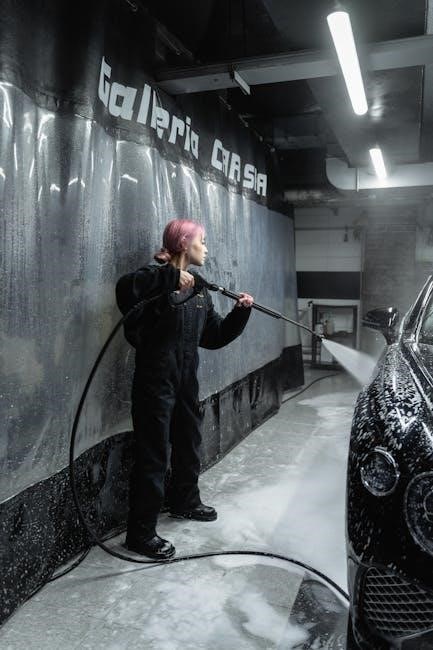
Be mindful of the surfaces you are cleaning; some soaps may be harmful to plants or landscaping. If soap comes into contact with skin or eyes, rinse immediately with plenty of water and seek medical attention if irritation persists.
Choosing Soap for Different Surfaces

Selecting the right soap is crucial for effective cleaning and surface protection. For automotive applications, utilize specifically formulated car wash soaps to avoid damaging paint or clear coats. Deck and patio cleaning requires soaps designed to remove algae, mildew, and grime, often containing bleach or specialized cleaning agents.
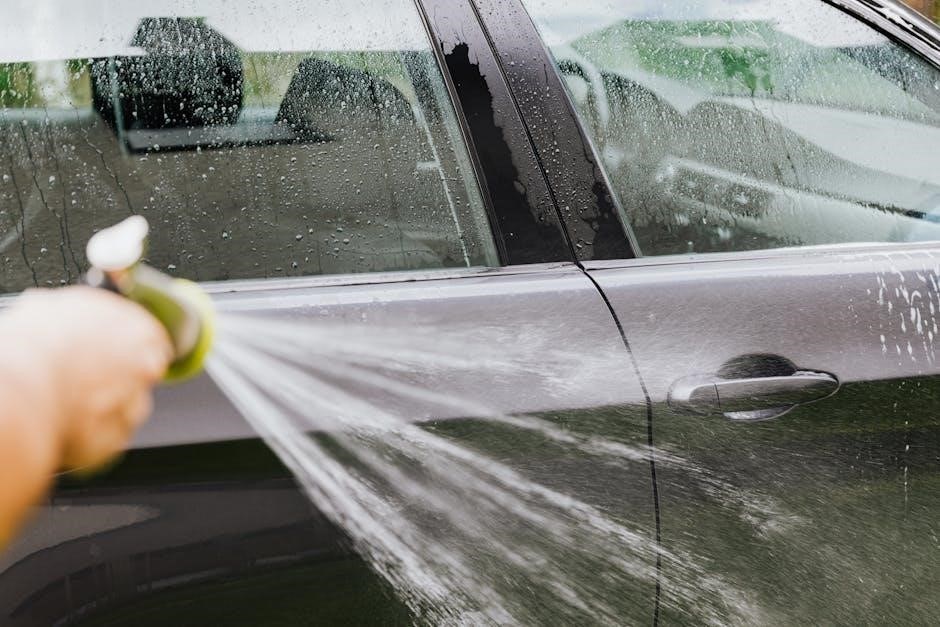
For siding and exterior surfaces, choose a soap appropriate for the material – vinyl, wood, or stucco – to prevent discoloration or damage. Avoid using harsh detergents on delicate surfaces like painted wood or aluminum. Consider environmentally friendly options for areas where runoff may affect plants or waterways.
Always test the soap in an inconspicuous area before applying it to the entire surface. Refer to the Sun Joe soap selection guide or consult with a cleaning professional for recommendations tailored to your specific needs. Using the incorrect soap can lead to streaking, etching, or irreversible damage.
Long-Term Storage of Soap & Washer
Proper storage is vital for maintaining your Sun Joe pressure washer and soap’s effectiveness. Before extended storage, thoroughly flush the soap tank and hose with clean water to prevent clogging and corrosion. Drain all water from the pump, hose, and wand to avoid freezing damage in colder climates.
Store the pressure washer in a dry, covered location, protected from direct sunlight and extreme temperatures. For soap, keep containers tightly sealed in a cool, dry place, away from direct sunlight and heat sources. Avoid storing soap that has been diluted, as it can degrade over time.
Inspect the washer and soap for any signs of damage before storage. Consider using a pump protector during storage to lubricate internal components. Regularly check stored soap for separation or changes in consistency; discard if compromised.